

The Strait of Hormuz Blockade: How the War with Iran Is Reshaping Global Shipping Routes
How the war with Iran and the Strait of Hormuz blockade are rerouting global shipping — Cape diversions, soaring war-risk premiums, and how NOVALOG keeps cargo moving.
The 2026 war with Iran and the closure of the Strait of Hormuz have triggered one of the sharpest shocks to global shipping in modern history. With the Persian Gulf's only sea exit blockaded, carriers have rerouted around the Cape of Good Hope, war-risk premiums have soared, and freight rates have climbed worldwide — reshaping how cargo reaches the Middle East, Asia and Europe.
What happened in the Strait of Hormuz
On 28 February 2026, military strikes against Iran triggered the maritime industry's most-feared tail risk: the closure of the Strait of Hormuz, the 33-km-wide channel between Iran and Oman that carries around a quarter of the world's seaborne oil and a large share of its LNG, fertilizers and Gulf container traffic.
The shock was immediate. According to maritime and trade reporting:
- Within 24 hours, traffic through the strait fell by 80%.
- Within 72 hours, most insurers had cancelled war-risk cover for the entire Persian Gulf.
- Within a week, roughly 750 vessels were stranded on either side of the strait, carrying an estimated $15.3 billion of oil and gas, with thousands of seafarers caught in the disruption.
War-risk insurance — when it could be obtained at all — surged to around 4% of a ship's value for a seven-day policy, against a pre-crisis norm closer to 0.001%: a premium thousands of times higher than normal. Brent crude pushed above $90 a barrel.
A framework peace agreement — the Islamabad Declaration — was reported as ratified in Geneva on 19 June 2026, with the strait expected to reopen within 30 days. But traffic has been slow to return: insurers and owners are waiting for the security picture to settle, premiums remain structurally elevated, and Tehran has signalled it may introduce transit fees that never existed before. The lesson for shippers is clear: the chokepoint is reopening, but the old playbook is gone.
How the blockade rerouted global shipping
The Gulf is not a place cargo can simply skip. When Hormuz closed, the effects cascaded across every major trade lane.
Carriers diverted around the Cape of Good Hope
All four of the world's largest container lines — Maersk, MSC, CMA CGM and Hapag-Lloyd — suspended Hormuz transits in early March. With the Red Sea already off-limits since the Houthi campaign of late 2023, the Cape of Good Hope became the default routing for Asia–Europe services. That adds up fast:
- Port-to-port transit stretches to 34–38 days, versus 22–24 via Suez.
- An estimated 5–7% of global container fleet capacity is absorbed by the longer route — the equivalent of removing 1.3–1.8 million TEU from the market.
- Asia–Europe freight rates have run 25–40% above pre-crisis levels, with some spot lanes far higher.
Cargo piled into alternative hubs
Container diversions surged more than 360%, according to supply-chain visibility data — from a baseline of about 218 shipments a day to over 1,000, peaking at 2,363 in a single day. Cargo bound for Gulf ports such as Jebel Ali (Dubai), Abu Dhabi and Hamad (Qatar) was redirected to Khor Fakkan on the UAE's east coast — outside the Gulf and reachable without entering the strait — and onward through Indian hubs, which strained under the sudden influx.
Costs rose everywhere — not just the Gulf
Because vessels and boxes were tied up on longer routes, rates climbed on lanes that never touch Hormuz. In June, spot container rates were reported running well above pre-conflict levels from China to the US East Coast, to North Europe and across the Mediterranean. As UNCTAD warned, chokepoint shocks transmit through energy, fertilizer and transport costs into the wider economy — exactly as the world saw at the start of the war in Ukraine.
What this means for your cargo
If you import or export anything that touches the Middle East, Asia–Europe lanes or Gulf transshipment, the blockade changes your planning in four concrete ways:
- Longer, less predictable transit. Build extra weeks into lead times and inventory buffers; the Cape route is the new baseline for many services.
- Higher landed cost. Expect elevated ocean rates, bunker and war-risk surcharges. Our explainer on bunker and fuel surcharges shows how these line items work.
- Insurance and Incoterms matter more than ever. Who carries the risk on each leg is now a real money question — review your Incoterms and your cargo insurance before you fix a booking.
- Routing flexibility wins. Shippers tied to a single lane are exposed; those who can pivot to alternative hubs and modes keep moving.
How NOVALOG keeps cargo moving through disruption
Reading a crisis correctly is what a freight forwarder is for. NOVALOG UKRAINE has spent 15+ years routing ocean, OOG and project cargo through exactly these kinds of shocks — IMO 2020, COVID, the Red Sea, and now Hormuz.
- Alternative routing on tap. We compare sea, rail and road options and transship via accessible hubs, so a closed chokepoint slows your cargo instead of stopping it.
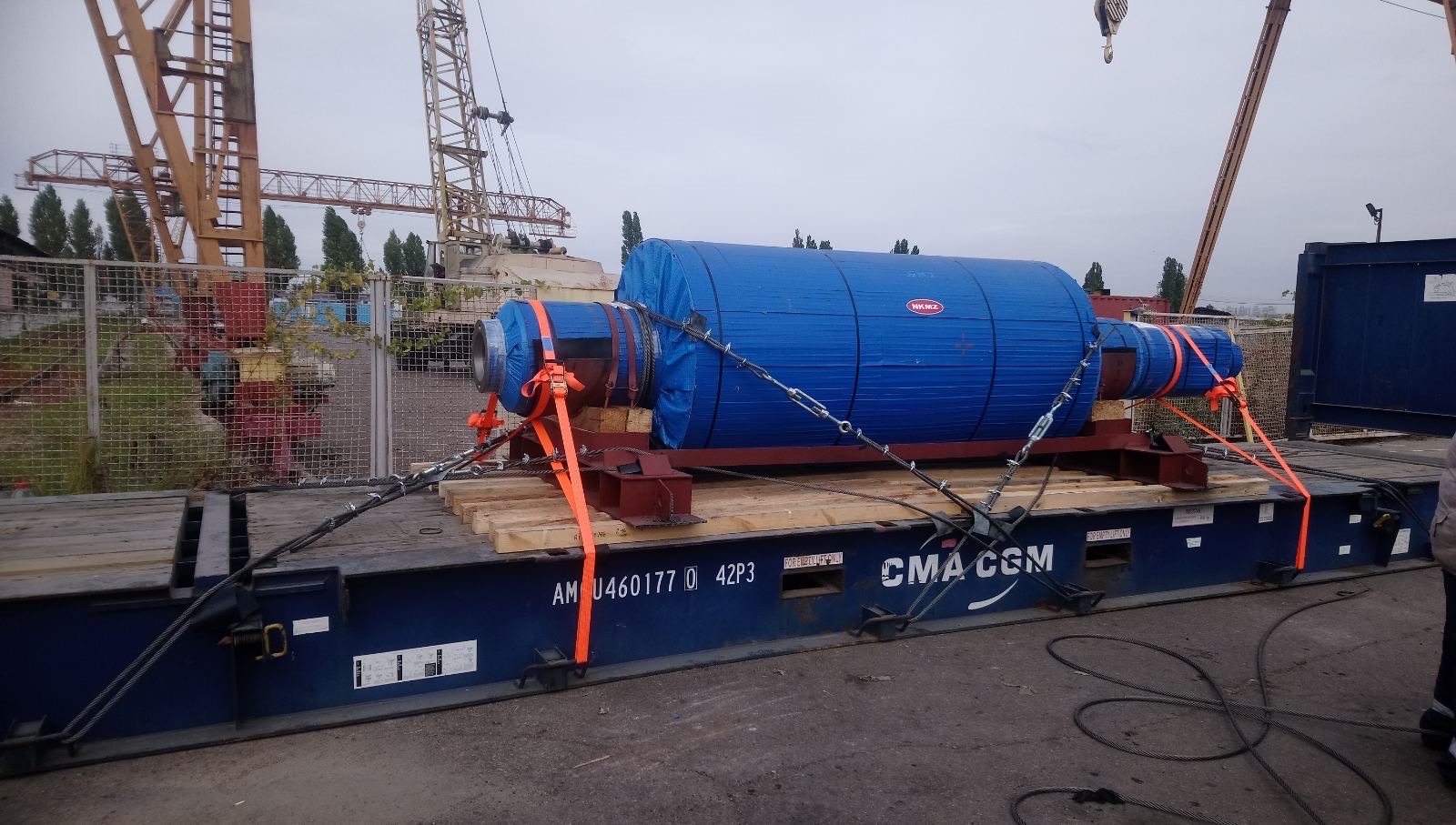
- OOG and breakbulk expertise. With our 3,799 m² Odesa terminal and two 50-tonne gantry cranes, we handle the heavy, awkward cargo that standard networks turn away — even when capacity is tight.
- Insurance and customs in-house. We arrange war-risk and all-risk cover sized to your route, and clear cargo through our nationally licensed broker and worldwide network.
- One point of accountability. Whatever the headlines, you talk to one team that owns your shipment end to end.
See how we put this to work on our services page, or read more about NOVALOG.
Frequently asked questions
Is the Strait of Hormuz open again?
As of mid-June 2026, a framework agreement points to reopening within roughly 30 days, but normal traffic has been slow to return. Insurers and shipowners are waiting for stable security conditions, and war-risk premiums — though down from their peak — remain well above pre-crisis levels.
How does the Hormuz blockade affect shipping rates?
It removes effective fleet capacity by forcing the longer Cape of Good Hope route, which pushes up ocean freight rates, bunker and war-risk surcharges across many lanes — not only those that pass through the Gulf.
Can I still ship cargo to or from the Middle East?
Yes. Cargo is being rerouted via hubs outside the Gulf, such as Khor Fakkan, and transshipped onward. A forwarder with flexible routing and Gulf experience can keep your supply chain running.
How can I protect my supply chain from chokepoint disruptions?
Diversify routes and modes, build realistic transit buffers, confirm your Incoterms and insurance, and work with a forwarder who can pivot quickly when a lane closes.
Don't let a closed chokepoint close your supply chain
Global routes will keep shifting — but with the right partner, your cargo keeps moving. Whether you ship to the Gulf, across Asia–Europe, or out of Ukraine, NOVALOG's solutions team will build you a route that works under today's conditions.
Request a freight quote and let's plan a resilient route for your cargo.