

War in Ukraine and Logistics: Moving OOG Cargo and Heavy Machinery Out of the Kramatorsk Region
How the war in Ukraine is reshaping logistics — and how NOVALOG moves OOG cargo and heavy machinery out of the Kramatorsk region by road, rail and the Black Sea.
The war in Ukraine has rewired the country's logistics in real time. For shippers moving out-of-gauge (OOG) cargo and heavy machinery — including the metalworking and machine-tool plants now being relocated from the Kramatorsk region — success depends on a forwarder who can combine road, rail, the Danube and the Black Sea corridor into one resilient route.
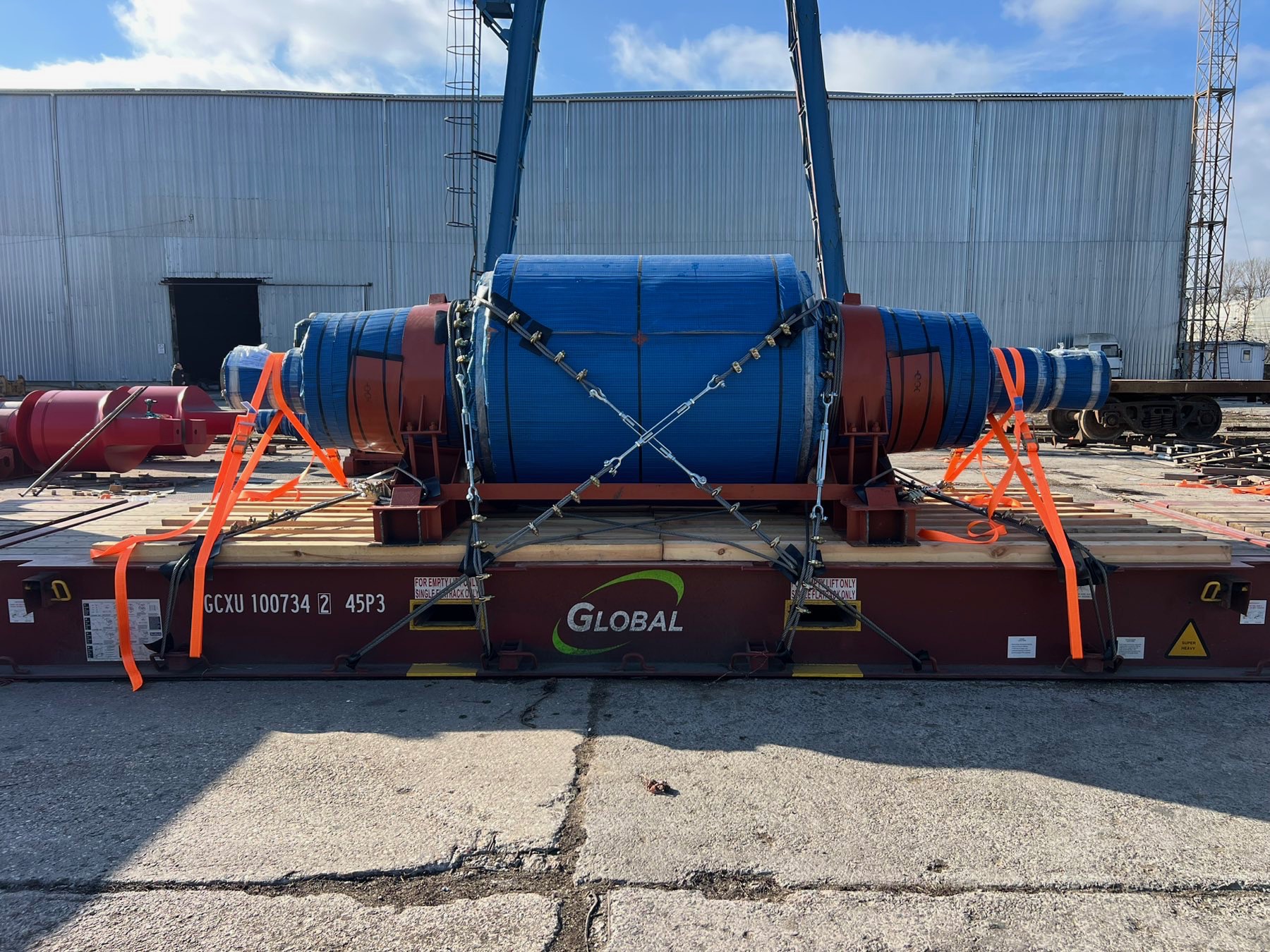
How the war redrew Ukraine's logistics map
Four years of full-scale war have not closed Ukraine to trade — but they have completely changed how cargo moves. The single most important development is Ukraine's own Black Sea maritime corridor, the coastal sea lane linking the Greater Odesa ports (Odesa, Chornomorsk and Pivdennyi) with Romania's Constanța and the Bosphorus.
The numbers tell the story of a corridor that refuses to close:
- The Greater Odesa ports handle roughly 89–94% of Ukraine's seaborne exports and processed more than 82 million tonnes of cargo in 2025.
- Container trade is recovering fast — regional volumes jumped more than 77% in 2024, with global lines such as Maersk and MSC calling at Chornomorsk again.
- Since mid-2023, Ukraine's wartime corridor has carried well over 100 million tonnes of cargo.
That resilience comes at a cost. According to industry and government reporting, strikes on Odesa-region port infrastructure roughly doubled in 2025, periodically cutting monthly throughput by 20–30%. Attacks on the rail network and power grid lengthen transit times, force diesel locomotives onto electrified lines, and mean war-risk insurance is now a line item on every voyage. Inland, exporters lean on three routes in parallel: the deep-water Odesa ports, fifteen western land-border crossings, and the Danube river ports (Reni, Izmail, Galați, Giurgiulești).
For a cargo owner, the question is no longer "can we ship?" but "how do we ship safely, on time, and fully insured?" That is precisely the problem a specialist freight forwarder is built to solve.
"Moving Kramatorsk": relocating heavy industry to the west
In June 2026, The Economist reported on one of the war's largest industrial logistics operations: the evacuation of metalworking and machine-tool factories from Kramatorsk in the Donbas to Perechyn in Transcarpathia, in Ukraine's far west. The project — informally called "New Kramatorsk" — began quietly in 2022 and has accelerated sharply as the front line approaches the city. More than 3,500 skilled workers have already moved west, and entire production lines are being dismantled, crated and trucked across the country.
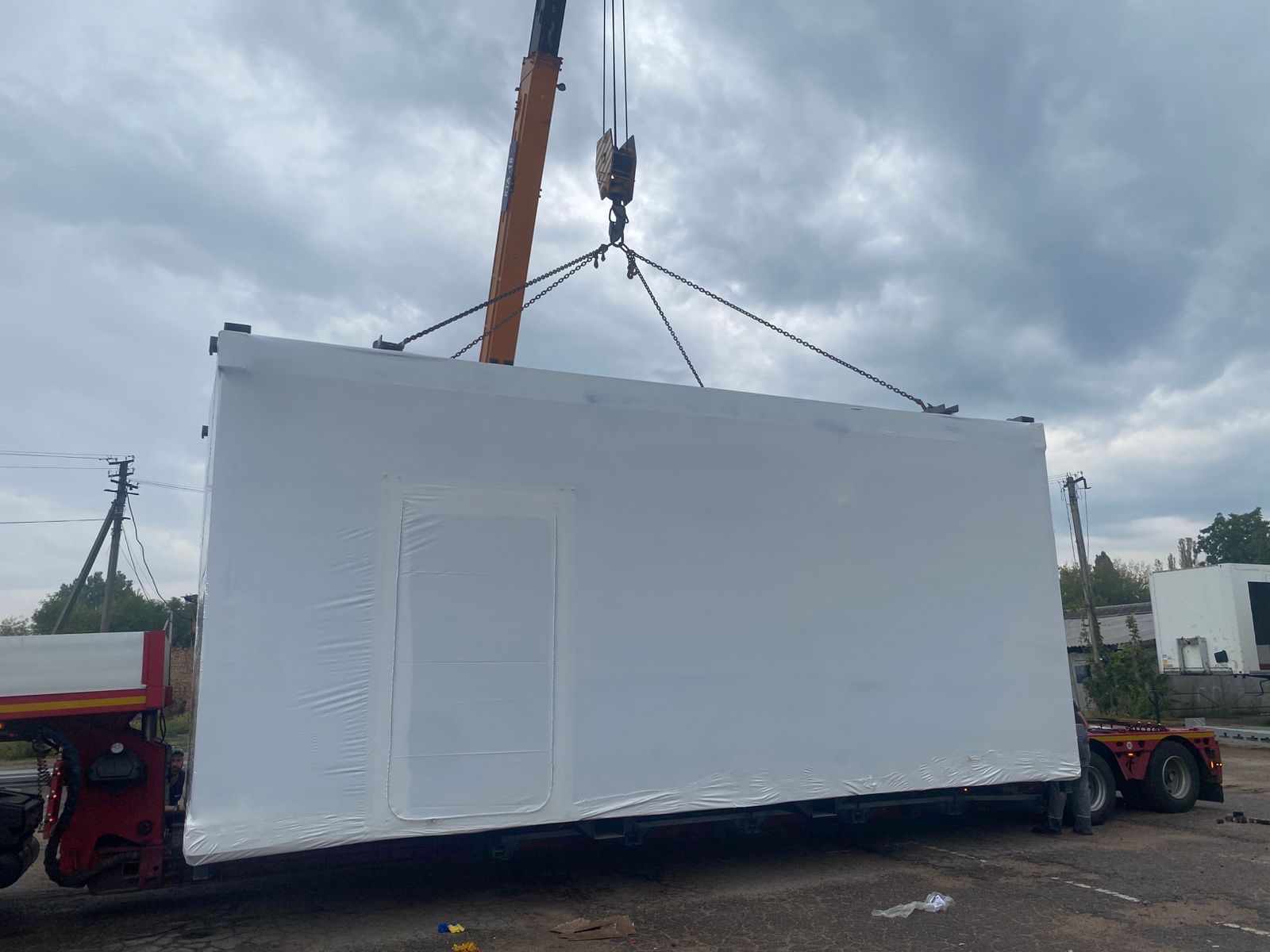
This is heavy-machinery logistics at its most demanding. Relocating a working plant means moving:
- Multi-tonne lathes, presses, rolling-mill rollers and machine tools that exceed standard container dimensions.
- Modular workshops and control cabins that ship as single oversized units.
- Spares, tooling and stock that have to arrive in the right sequence so the line can restart on the other end.
Each piece needs the right equipment, the right permits and a route that accounts for bridges, weight limits and checkpoints before the truck rolls. It is the same discipline NOVALOG has applied to OOG and breakbulk freight for over 15 years — only now the clock and the threat map are unforgiving.
Why shipping OOG cargo and heavy machinery is harder in wartime
Out-of-gauge and project cargo were never simple. War adds new layers:
- Routing under threat. Air-raid alerts pause port operations and close roads at short notice. Plans need built-in alternatives across sea, rail and river.
- Power and equipment. Cranes, reach-stackers and pumps are electric; grid strikes mean terminals must run on generators, which slows the handling of the heaviest lifts.
- Permits and dimensions. Over-dimensional moves still require axle-load calculations, route surveys and escorts — coordinated now around a shifting security picture.
- Insurance. War-risk and all-risks cargo insurance is no longer optional. Getting the cover right — and at a workable rate — protects your balance sheet if the worst happens.
If you are new to oversized freight, our guide to shipping oversized and OOG cargo walks through the seven questions clients ask most.
How NOVALOG adapts: one partner, the whole chain
NOVALOG UKRAINE was built for exactly this environment. We combine our own infrastructure with a worldwide network so that complex, high-value cargo keeps moving:
- Our Odesa container terminal — a 3,799 m² yard beside the Odesa and Pivdennyi ports, with two 50-tonne gantry cranes purpose-made for OOG and breakbulk lifts, 380 V reefer power, and secure storage.
- True multimodal routing — sea via the Black Sea corridor, rail and road across Ukraine and into the EU, and the Danube as a fallback. One team, one point of accountability.
- In-house customs brokerage — a nationally licensed broker plus a global representative network for clearance in Ukraine, the EU, the USA and beyond.
- Cargo insurance done properly — we work directly with underwriters to size war-risk and all-risk cover to your route.
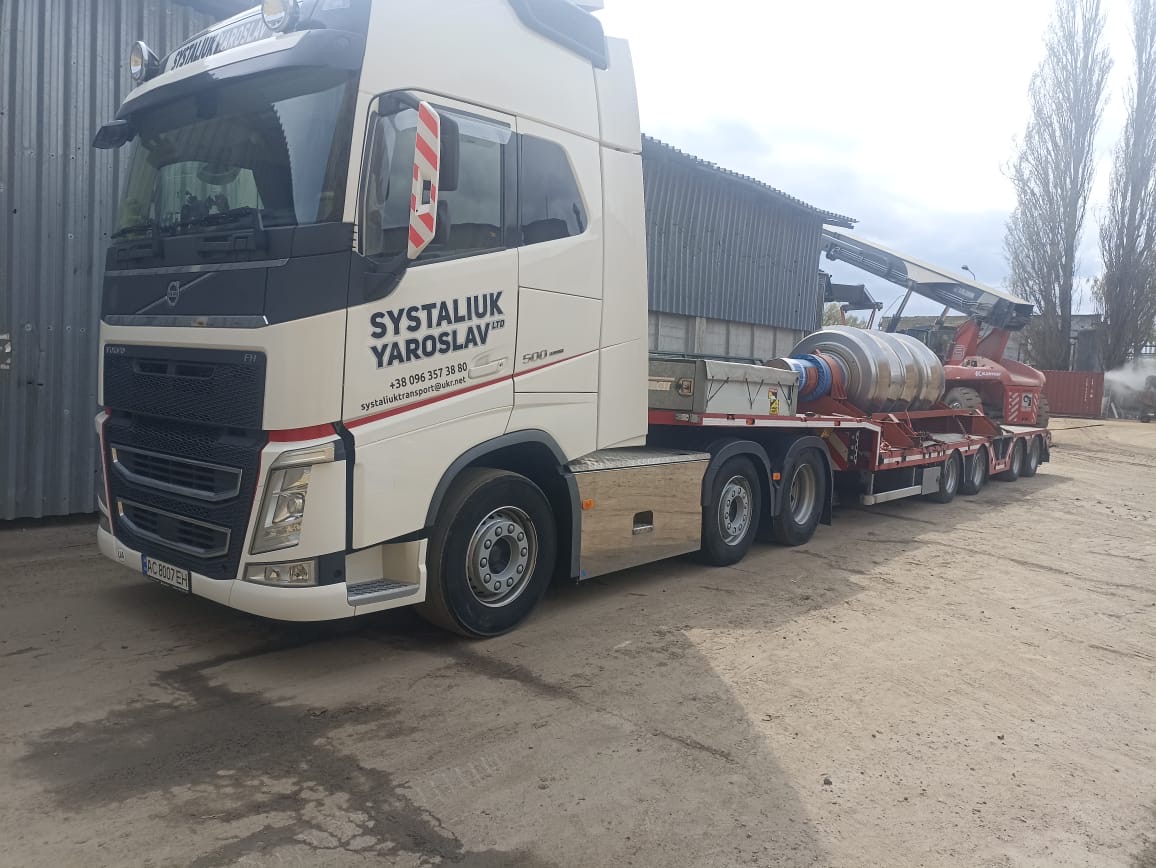
Whether it is a single over-dimensional roller, a relocating production line, or a steady monthly container programme, we engineer the route around your cargo — not the other way round. You can see the full range on our services page, and learn more about our team and terminal.
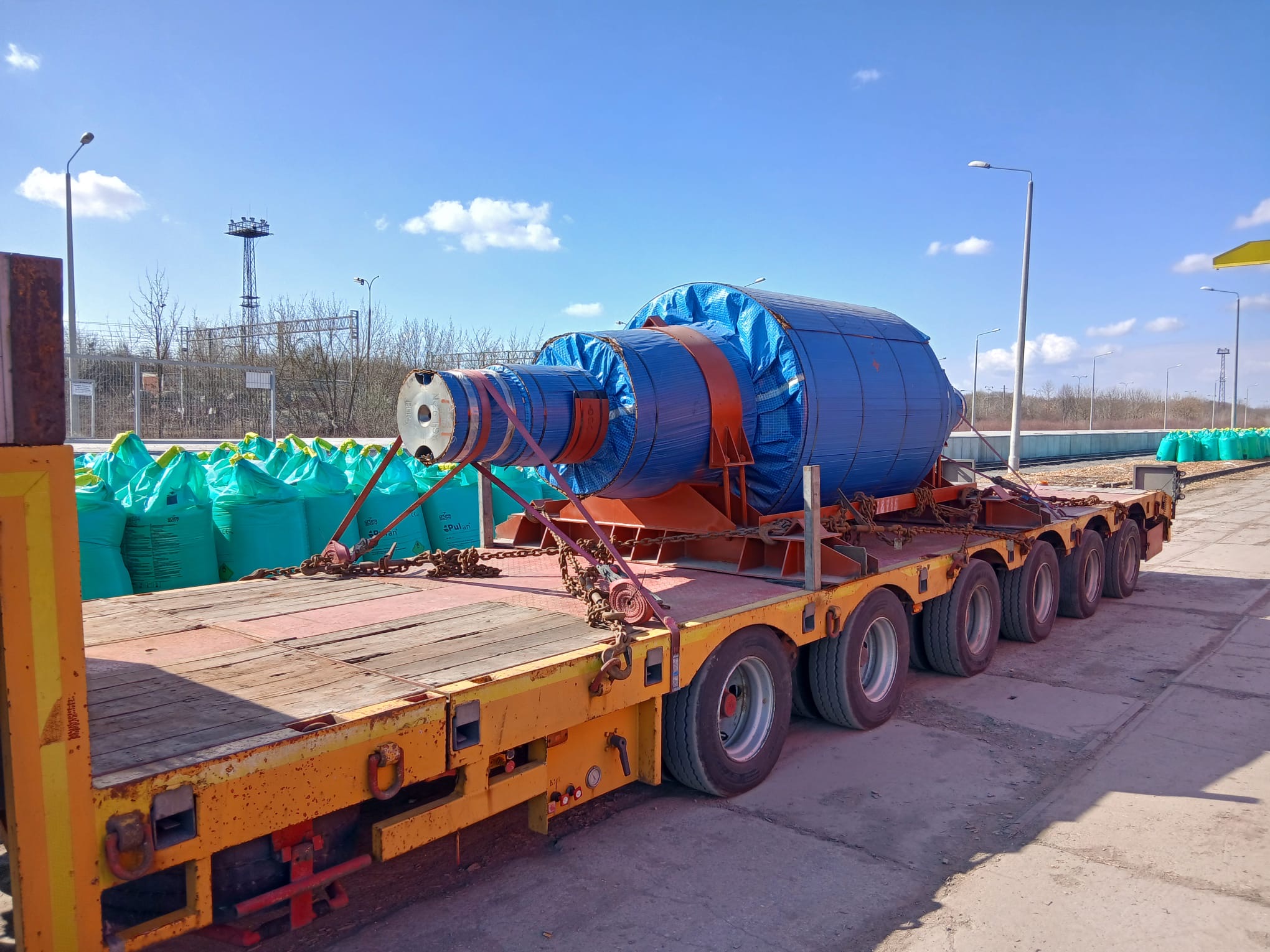
Frequently asked questions
Can you still ship cargo out of Ukraine in 2026?
Yes. Ukraine's Black Sea maritime corridor and its ports at Odesa, Chornomorsk and Pivdennyi remain open and handle the large majority of the country's exports, supported by rail, road and Danube-river routes. The key is a forwarder who plans for disruption and insures every leg.
How do you move heavy machinery and OOG cargo during the war?
We match each piece to the right equipment — flat-rack, low-bed trailer, breakbulk or our 50-tonne gantry cranes — secure the permits and route survey, and combine sea, rail and road so a strike on one link does not stop the shipment.
Is cargo insurance available for shipments from Ukraine?
Yes. War-risk and all-risk cover is available and, in current conditions, essential. We arrange it directly with underwriters and price it to your specific route and cargo.
Which Ukrainian ports are operating?
The Greater Odesa ports — Odesa, Chornomorsk and Pivdennyi — are the operational hubs. The Mykolaiv ports have not yet been relaunched, so they should not be assumed available when planning calls.
Move your cargo with a partner who knows the ground
The map has changed, but expert logistics still gets your cargo where it needs to be. If you are relocating equipment, exporting project cargo, or simply need a Ukraine freight partner you can rely on under pressure, our solutions team is ready to help.
Request a freight quote and tell us about your cargo — we will engineer the safest, most cost-effective route for it.
Choose the right logistics company.
Experience the NOVA difference!
Related services: project cargo & heavy machinery logistics in Ukraine and out-of-gauge (OOG) cargo shipping.